Farms & Gardens

Spring, Sheep, and Responsible Husbandry

Spring is a time of never ending chores, but also a season of re-awakening as daylight hours lengthen and temperatures climb. The darkness of winter is washed away in the spring rains and as new life emerges, so does the fresh hope of the season. Hope, faith, and trust in the earth are what encourage farmers to continue a risky business in which a bout of inclement weather can bust a season and wash profits down the drain.


Farming is also an incredibly sensory experience. The rich aroma of soil ready to be planted, the sun kissed, fertile earth opening to accept seed, the cool breezes carrying calls of returning flocks of birds, all of these beckon in spring. I am enveloped by “the peace of wild things” and “for a time, I rest in the grace of the world, and am free.” (Wendell Berry) 


Read more »

A Return to the Fields: Immigrant and Refugee Farmers Find Refuge at Big River Farms

Big River Farms Farmer in Training

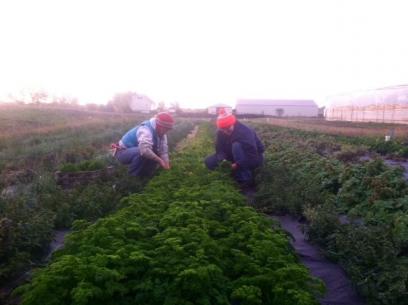
 My most recent local food discovery commences at the Wilder Forest located in the Marine on St. Croix. From within the forest, one will find a quaint non-profit organization known as the Minnesota Food Association (MFA).

Read more »

Straw Bale Gardening: The Promise of a New Spring

Every spring I imagine my ideal garden: weed free, self-tilling, self-watering, disease-resistant, a garden safe from hungry, pesky bugs and critters. Every spring for the past seven years I set out to my little strip of trucked-in topsoil behind the garage of our Lanesboro farm house, determined to coax the ideal garden out of the ground this time, at last! And every midsummer about the time a good dry spell sets in, I am humbled by the many troubles that have cropped up in my perfect little garden. The weeds have somehow managed to out-strip everything – many as tall as I am (granted, I’m short). Still, it’s sobering to realize how entirely I’ve lost my focus on weeding and watering, how compacted the soil has become, how cabbage moths and tomato blight have taken a harsh toll. 


Read more »

Adventures in Sugaring: Making your own Maple Syrup

After a long winter, it was finally time to make maple syrup—otherwise known as "sugaring". So on a strangely warm Thursday, my friend and I jumped into our car and drove north and then east to my family's cabin near Hayward, Wisconsin. This year did not look too promising with the weather being so balmy and not getting below freezing at night, even in northern Wisconsin...but hey, you never know.


A few minutes drive from our cabin is the Sugarbush, 60 acres of beautiful, thickly wooded land where we tap 35 maple trees. It is a small, family operation but has definitely come a long way through the years. It hasn't necessarily grown but over time, it has become more functional, with the exception of the old logging road that goes onto our land. It is too over-grown to really be considered a road so we park and walk the half mile to where we tap the trees. 


Read more »

The Short and Sweet of the 2012 Maple Syrup Season. Recipe: Homemade Granola Bars.

Local Maple Syrup

The record breaking temperatures of February and March were delightful for many, but a challenge for those living off the land such as maple syrup crafters. A surge in temperature following a below-freezing night creates pressurized sap lines, which then expand, pushing the sap to flow up the tree toward the branches- the sap is the energy that fuels the trees new growth. A tap is placed into the tree to “capture” some of the sugary sap which is then refined into deliciously sweet maple syrup. With very few cold days and nights occurring during this year’s prime of sapping time, many maple tree taps were churning out a very slow and sparse sap flow.

Read more »

Urban Agriculture Minneapolis Needs Your Voice

If you live in Minneapolis, and are a local food junkie, you might have heard some rumblings about the Urban Agriculture Zoning Text Amendments that are coming before the City Council's Zoning and Planning Comittee on March 1. This process, prompted by Homegrown Minneapolis way back in 2008, has been a long time coming in terms of making urban agriculture a legal use of land in the City of Minneapolis. After a two-year process in which stakeholders, urban farmers, city officials, and neighborhood residents have agonized over striking the right balance between the entrepreneurial urban farmers’ needs and neighbors’ peace of mind, these amendments to the Minneapolis zoning code are in danger of being severely weakened to the point of undoing all of the careful work by city planners, citizen advisory committees and urban farmers.

Read more »

Ace and Other Magnificent (Fainting) Goats. Recipe: Goat Tagine.

Ace was magnificent. His thick, cocoa colored fur rose to a spikey crest down his backbone and his curved horns were ridged, thick and powerful. Although he resembled a thug, equipped with Mohawk and weapons, he had a gentle disposition and would tip over when startled, just like the rest of the herd: Ace was a Tennessee Fainting Goat.


Read more »

And Then There Were Ducks: Raising and Roasting a Muscovy

Its tenderness and flavor, size and cheapness were the themes of universal admiration. Edged out by apple-sauce and mashed potatoes, it was a sufficient dinner for the whole family…”

~Charles Dickens, ‘A Christmas Carol’


We came to poultry later in our grand scheme than we had originally intended. After purchasing day old chickens from the Murray McMurray Hatchery, and having some success with eggs and meat, we decided to try our hand at ducks. While attending a local auction, we ran across our fainting goat breeder (more on that story later) and found she had brought a hatch of Muscovy ducklings to the auction.


Read more »

Giving Thanks on the Farm: An Update From Peterson Limousin Farms

This has been an unbelievable autumn. The weather has been gorgeous and it’s made for a warm invitation to finish summer projects before winter sets in.


This year’s crops yielded really well. Our hay and corn silage supplies for winter are some of the best in recent memory. The timely rainfall this summer really played a critical role in keeping plants nourished and productive. Although summer started rather cool, July and August provided the necessary heat units to spur plant growth. Our cows came off of grass this fall looking plump and content. They weaned off strong, healthy calves that are really starting to settle in and grow well. 


Last week we pregnancy-checked our cowherd and saw good results. Pregnancy-checking is critical to the survival of a cattle operation. Open (non-pregnant) cows lose money. They consume feed and have nothing to show for it.


Read more »

Some Pig! The Real Dirt on Raising Pigs

“Of all the major livestock species, none is more misunderstood and less appreciated than the hog.”

So starts Storey’s Guide to Raising Pigs by Kelly Klober. Pigs are very often considered dirty animals (have you ever called your kid’s room a “pigsty”?), and generally have a bad reputation in the public eye. As much as I love pork, it was with much trepidation that I traveled to our local pig breeder to bring home two new additions to our growing menagerie. We’d prepared a pen, purchased feed, and read the books (Storey’s Guide, Versa Press 1997 and Raising Pigs Successfully, Kathy and Bob Kellogg, Williamson Publishing, 1985). Nevertheless, my husband Doug understood that if I didn’t like pigs, they wouldn’t be my responsibility. 

Read more »
Syndicate content